

YouTube-view song profile
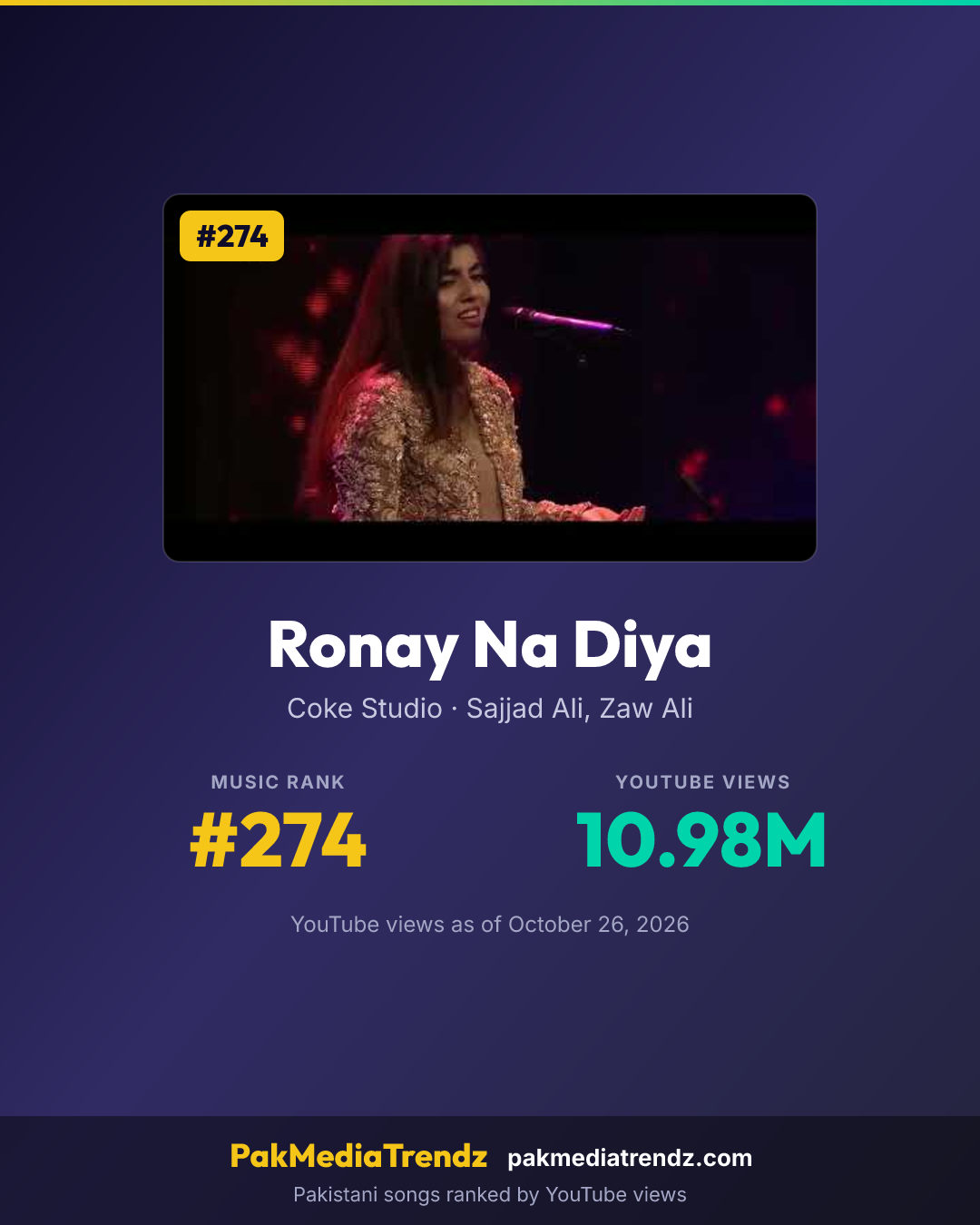
Ronay Na Diya
- Music Rank
- #274
- YouTube Views
- 10.98M
- Category
- Coke Studio
Watch Ronay Na Diya
Plays here via youtube-nocookie.com — nothing loads from YouTube until you press play.
The Story Behind Ronay Na Diya
Ronay Na Diya brings Sajjad Ali and Zaw Ali together for Coke Studio Pakistan's tenth season, with Strings producing and directing the 2017 performance. Sajjad Ali also served as music director, shaping the celebrated ghazal into a duet that honors Begum Akhtar while giving it a contemporary vocal contrast. His measured, weathered delivery carries the remorse at the song's center, while Zaw Ali answers with agile R&B runs and classically inflected phrasing. Leonard Massey's clarinet supplies the arrangement's most plaintive color, and Sajid Ali's flute deepens its reflective mood. The result respects the composition's literary weight without treating it as a museum piece: the two singers turn Sudarshan Faakir's words into an intimate exchange about grief, restraint, and all that remains unsaid.
Meaning & Translation
Ronay Na Diya means "did not let me cry" in Urdu. The phrase captures a speaker whose sorrow is intense but continually held back by pride, memory, and the beloved's words. Rather than presenting tears as simple release, Sudarshan Faakir's ghazal turns restraint into its central wound: even grief cannot be expressed freely. The repeated idea of being unable to weep suggests love has left the speaker suspended between longing and self-control. In Sajjad Ali and Zaw Ali's duet, the alternating voices make that conflict feel conversational, as though two emotional perspectives are circling the same loss. It is a lament about pain made heavier because it remains unspoken.
Details
Artists & Credits
- Sajjad Ali singer
- Zaw Ali singer
- Sajjad Ali composer
- Sudarshan Faakir lyricist
- Leonard Massey musician
- Sajid Ali musician
- Strings producer