
YouTube-view song profile
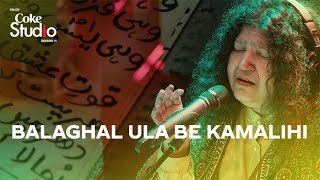
Balaghal Ula Be Kamalihi
- Music Rank
- #137
- YouTube Views
- 26.49M
- Category
- Coke Studio
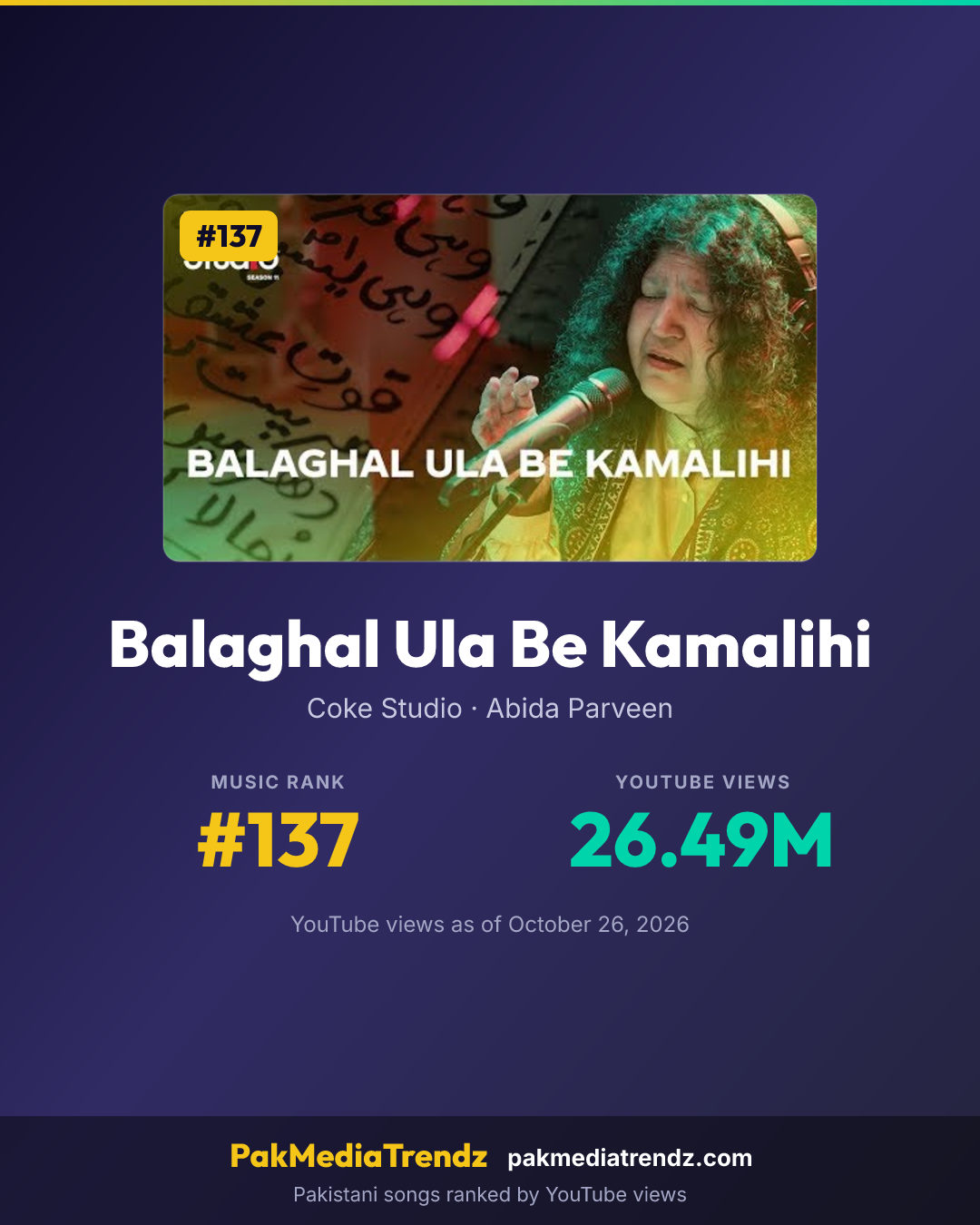
Watch Balaghal Ula Be Kamalihi
Plays here via youtube-nocookie.com — nothing loads from YouTube until you press play.
The Story Behind Balaghal Ula Be Kamalihi
Abida Parveen's "Balaghal Ula Be Kamalihi" arrived in the seventh episode of Coke Studio Pakistan's eleventh season in October 2018, presenting a multilingual naat as an extended devotional performance. Producers Zohaib Kazi and Ali Hamza built the session around kalaam credited to Hazrat Bedam Shah Warsi and a composition by Parveen herself. Her solo vocal remains the center of the arrangement, moving from intimate invocations into ringing, sustained phrases while the house band maintains a measured pulse. Haniya Aslam's baglama adds a bright, plucked color among the dholak, drums, bass, guitar, and keyboards. Rather than treating its several texts as separate pieces, the performance joins them into one arc of praise and spiritual reflection, giving Parveen room to turn repetition into mounting intensity.
Meaning & Translation
The Arabic title "Balaghal Ula Be Kamalihi" means that the Prophet Muhammad reached the highest station through his perfection. The naat is an act of praise, not a romantic song in the ordinary sense. Its images of radiance, beauty, ascent, and the meeting of light with light describe spiritual nearness and the Prophet's exemplary qualities. Arabic blessings are woven through Urdu and Persian devotional poetry, so repeated invocations work like remembrance as much as song. The central refrain says that darkness was dispelled through his beauty and that all his qualities became beautiful, before asking listeners to send peace and blessings upon him and his family.
Details
- Artist
- Abida Parveen
- Category
- Coke Studio
- Collection
- Coke Studio Season 11
- Released
- 2018
- Genre
- Devotional
- Mood
- Devotional
- YouTube Views
- 26.49M
Artists & Credits
- Abida Parveen singer
- Abida Parveen composer
- Hazrat Bedam Shah Warsi lyricist
- Haniya Aslam musician
- Zohaib Kazi producer
- Ali Hamza producer