

YouTube-view song profile
Umran Langiyaan
- Music Rank
- #322
- YouTube Views
- 8.86M
- Category
- Coke Studio
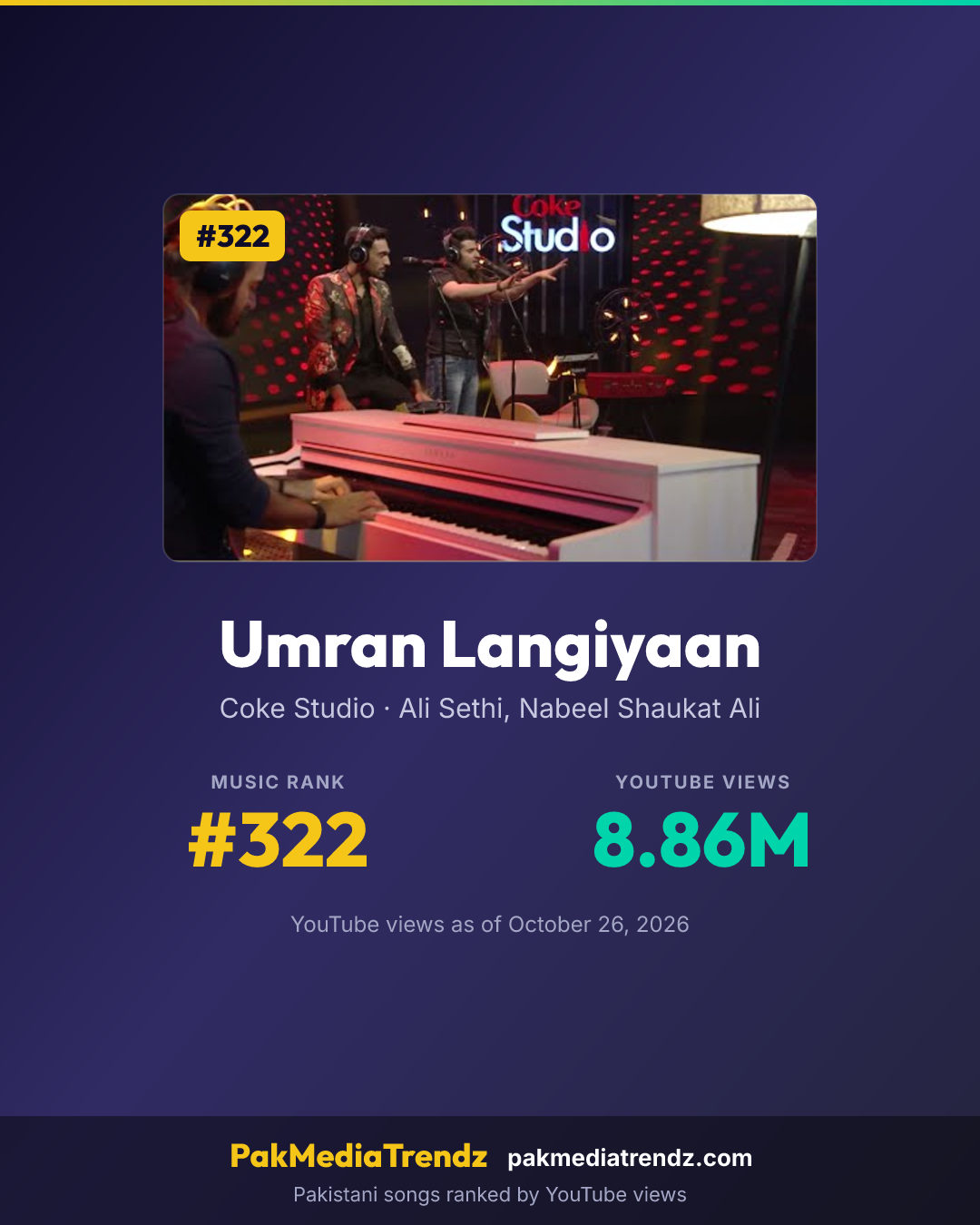
Watch Umran Langiyaan
Plays here via youtube-nocookie.com — nothing loads from YouTube until you press play.
The Story Behind Umran Langiyaan
Ali Sethi and Nabeel Shaukat brought Umran Langiyaan to Coke Studio Pakistan's eighth season in 2015, with Strings producing an arrangement that treats longing as both intimate confession and shared folk memory. The performance revisits Asad Amanat Ali Khan's signature setting of Mazhar Tirmazi's poem, whose opening also draws on couplets by Khwaja Ghulam Farid. Sethi leads with poised, high-register phrases, then Nabeel enters midway through a linked Punjabi folk passage associated with Allah Ditta Lonaywala. A bright banjo line gives the otherwise classically inflected performance an unexpected bluegrass color without disturbing its melancholy core. The recording marked Sethi's Coke Studio debut, and its later appearance in HBO's 2019 documentary The Case Against Adnan Syed gave this Pakistani classic another international setting.
Meaning & Translation
Umran Langiyaan means that whole lifetimes have passed in waiting, with the image of someone rising on tiptoe to search for an absent beloved. The song speaks in Punjabi and Saraiki idioms of separation: messages go unanswered, bangles keep sounding, and hope survives even as time is exhausted. Its beloved can be heard as a human lover, a lost homeland, or the divine, which is why the poetry moves easily between romance, exile, and Sufi yearning. The joined folk passage does not resolve that ache. Instead, its rhythmic brightness makes the waiting feel communal, as if private grief has entered a gathering and found a voice.
Details
- Artist
- Ali Sethi, Nabeel Shaukat Ali
- Category
- Coke Studio
- Collection
- Coke Studio Season 8
- Released
- 2015
- Mood
- Romantic, Melancholy
- YouTube Views
- 8.86M
Artists & Credits
- Ali Sethi singer
- Nabeel Shaukat Ali singer
- Allah Ditta Lonay Wala composer
- Asad Amanat Ali composer
- Strings composer
- Ali Sethi lyricist
- Nabeel Shaukat Ali lyricist
- Strings producer