
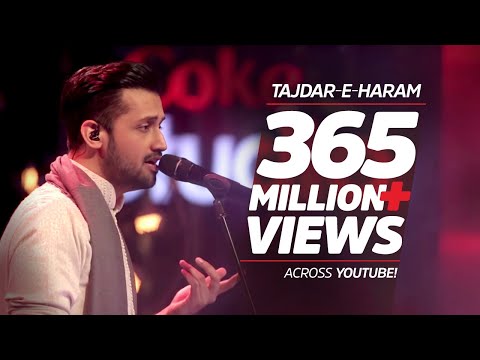
YouTube-view song profile
Tajdar-e-Haram
- Music Rank
- #6
- YouTube Views
- 667.95M
- Category
- Coke Studio
Watch Tajdar-e-Haram
Plays here via youtube-nocookie.com — nothing loads from YouTube until you press play.
The Story Behind Tajdar-e-Haram
Atif Aslam recorded Tajdar-e-Haram for the opening episode of Coke Studio Pakistan's eighth season in 2015, reimagining the celebrated qawwali as a tribute to the Sabri Brothers. The official release credits Strings as producer, while the composition and lyric lineage come from Maqbool Ahmad Sabri and Mirza Muhammad Hakim. A measured harmonium-led opening gives way to clapping qawwali momentum, layered responses and Tanveer Tafu's resonant string accents, allowing Aslam's voice to move from intimate prayer to a soaring communal plea. The performance became a landmark online release: in 2017, it was reported as the first Pakistani music video to cross 100 million YouTube views. Its lasting appeal lies in that balance of devotional gravity and accessible Coke Studio scale.
Meaning & Translation
Tajdar-e-Haram means "the crowned sovereign of the sacred sanctuary," an honorific address to the Prophet Muhammad. The qawwali is a devotional appeal from people who arrive burdened, vulnerable and hopeful, asking for a merciful gaze that can restore their lives. Its imagery of an empty cup being filled, a threatened boat finding safety and a journey toward Medina turns spiritual longing into something vivid and human. As the languages shift among Urdu, Persian, Arabic and Braj, the central idea stays constant: no sincere petitioner should leave the beloved's threshold empty-handed. Atif Aslam's rising delivery transforms that private supplication into collective affirmation, while the repeated title acts as both invocation and reassurance.
Details
- Artist
- Atif Aslam
- Category
- Coke Studio
- Collection
- Coke Studio Season 8
- Released
- 2015
- Genre
- Qawwali, Devotional
- Mood
- Devotional
- YouTube Views
- 667.95M
Artists & Credits
- Atif Aslam singer
- Maqbool Ahmad Sabri composer
- Mirza Muhammad Hakim lyricist
- Tanveer Tafu musician
- Strings producer