

YouTube-view song profile
Aaqa
- Music Rank
- #79
- YouTube Views
- 57.84M
- Category
- Coke Studio
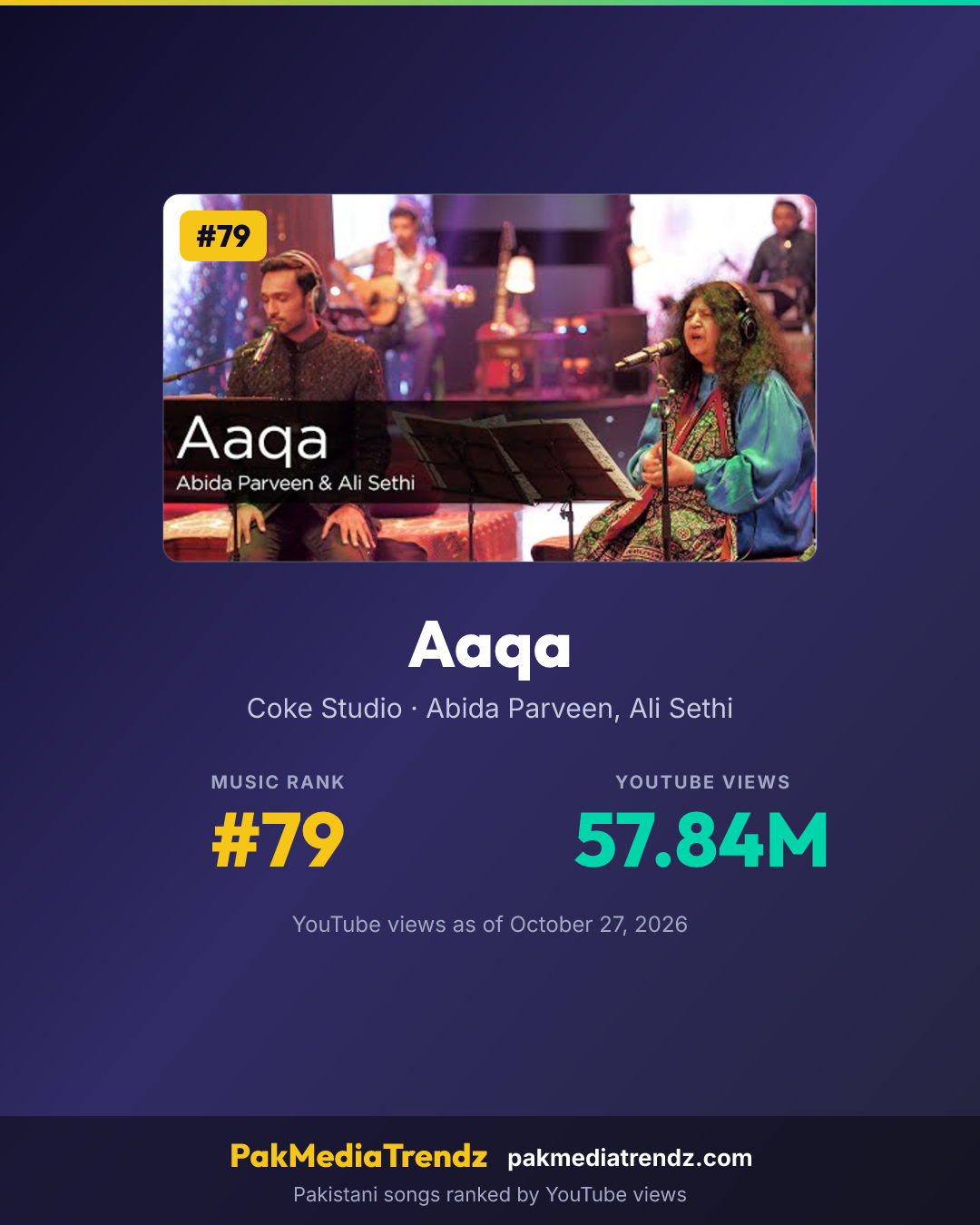
Watch Aaqa
Plays here via youtube-nocookie.com — nothing loads from YouTube until you press play.
The Story Behind Aaqa
Aaqa opened Coke Studio Season 9 in August 2016 as the first collaboration between Abida Parveen, the reigning queen of Sufi song, and a young Ali Sethi. Music director Shuja Haider built the devotional naat on a bed of serene guitar before the harmonium, rubab, and a fierce set of drums surge in beneath the two voices. Producers Strings paired the veteran with the newcomer deliberately, letting Abida Parveen's commanding, high-pitched delivery pull Sethi upward until their shared musical heritage takes the reins. The result is a soul-stirring piece of praise that greets the listener with immaculate clarity, an age-old naat recast for a contemporary stage and an enduring showcase of two generations of Pakistani devotional singing.
Meaning & Translation
The word aaqa (آقا) means master or lord, and in Urdu devotional poetry it is a tender form of address for the Prophet Muhammad (peace be upon him). The song is a naat, a hymn of praise and longing rather than a love song, and its verses circle a single feeling: the wish to be near the beloved master and to surrender the self before him. Abida Parveen and Ali Sethi do not so much narrate a story as repeat that yearning, letting the refrain climb higher with each pass until reverence tips into something close to ecstasy. It speaks less through individual lines than through the mood of devotion that the repetition builds.
Details
- Artist
- Abida Parveen, Ali Sethi
- Category
- Coke Studio
- Collection
- Coke Studio Season 9
- Released
- 2016
- Language
- Urdu
- Genre
- Devotional
- Mood
- Devotional
- YouTube Views
- 57.84M
Artists & Credits
- Abida Parveen singer
- Ali Sethi singer
- Shuja Haider composer
- Strings producer