

YouTube-view song profile
Khudi Ka Sirr-e-Nihan
- Music Rank
- #796
- YouTube Views
- 1.71M
- Category
- Single
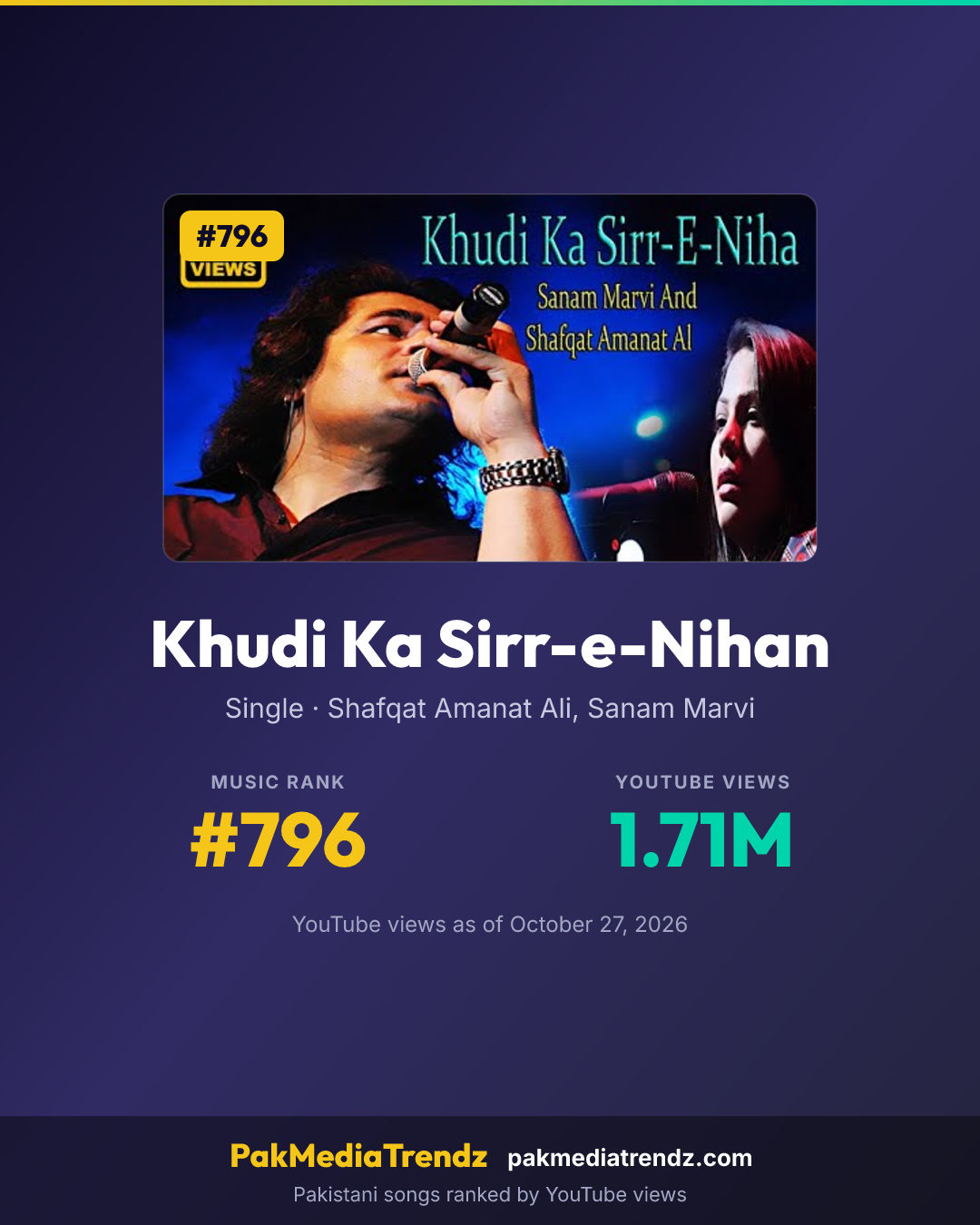
Watch Khudi Ka Sirr-e-Nihan
Plays here via youtube-nocookie.com — nothing loads from YouTube until you press play.
The Story Behind Khudi Ka Sirr-e-Nihan
Allama Iqbal built Khudi Ka Sirr-e-Nihan out of a single line of scripture. In Zarb-e-Kaleem he argues that the self is a sword and the kalima is the whetstone that sharpens it, and the whole nazm is that one image opened out.
This reading, close to nine minutes long, was made for Virsa Heritage Revived, the Pakistan Television heritage programme produced by Yousuf Salahuddin, who is Iqbal's own grandson. Shafqat Amanat Ali takes the opening couplets in the long, unhurried classical manner, weighting every Urdu syllable, and Sanam Marvi answers in the grainier Sindhi Sufi voice that made her reputation. The two never fold the refrain into harmony. They hand it back and forth, so la ilaha illallah arrives twice, in two different traditions, each time it comes round.
Meaning & Translation
Khudi is Iqbal's word for the self, and he does not mean the ego of everyday speech. He means the individuated soul that knows its own worth and refuses to bow to anything smaller than God. Sirr-e-nihan is its hidden secret, so the title is a claim rather than a question, and the Arabic phrase that completes the line, la ilaha illallah, there is no god but God, is the answer to it.
Iqbal's image for the relationship is a blade and a sharpening stone: monotheism is what gives selfhood its edge. Sung instead of recited, that argument turns into something closer to a vow, which is why the refrain keeps returning.
Details
- Artist
- Shafqat Amanat Ali, Sanam Marvi
- Category
- Single
- Collection
- Virsa Heritage Revived
- Released
- 2016
- Language
- Urdu
- Genre
- Devotional, Classical
- Mood
- Devotional, Motivational
- YouTube Views
- 1.71M
Artists & Credits
- Shafqat Amanat Ali singer
- Sanam Marvi singer
- Allama Iqbal lyricist
- Yousuf Salahuddin producer