

YouTube-view song profile
Jaan-e-Bahaaraan
- Music Rank
- #407
- YouTube Views
- 6.62M
- Category
- Coke Studio
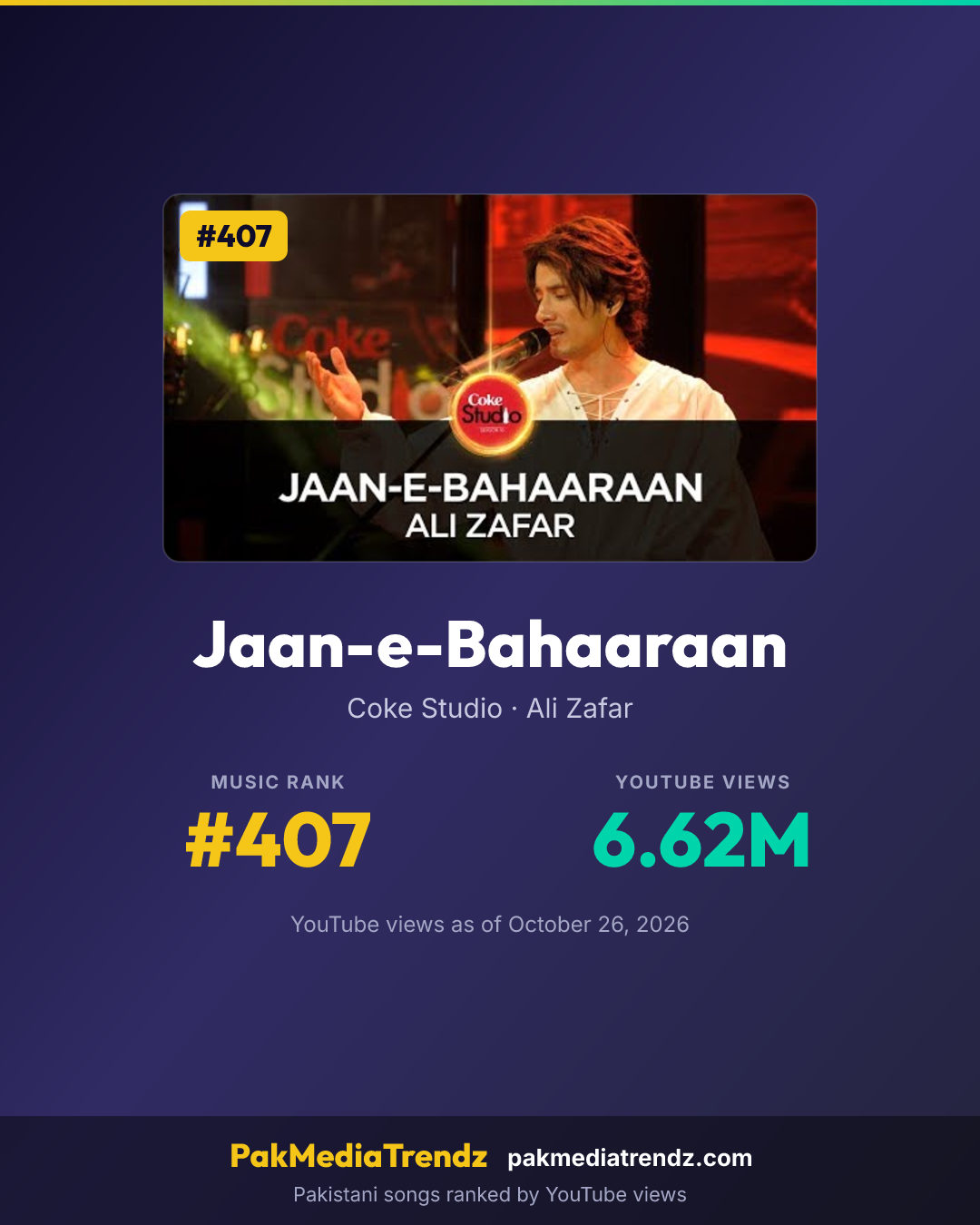
Watch Jaan-e-Bahaaraan
Plays here via youtube-nocookie.com — nothing loads from YouTube until you press play.
The Story Behind Jaan-e-Bahaaraan
Ali Zafar's 2017 Coke Studio rendition of Jaan-e-Bahaaraan revisits a classic written by Tanveer Naqvi and originally composed by Master Inayat Hussain for the 1962 film Azra. Released in Season 10's second episode, the performance was produced by Strings and musically directed by Shuja Haider as a tribute to Inayat Hussain's film-music legacy.
Rather than treating the melody as a museum piece, Haider preserves its theatrical sweep while threading Spanish color through the arrangement. A forceful string section and percussion give Ali Zafar's romantic delivery a stage-like grandeur, while guest musician Amir Azhar's rubab and nylon guitar, alongside Sajid Ali's flute, add contrasting textures. The result connects the polish of Coke Studio's house band with the dramatic language of classic Pakistani cinema.
Meaning & Translation
The title Jaan-e-Bahaaraan is a Persian-inflected Urdu expression meaning "soul of spring" or "beloved of the springtime." The song addresses an adored figure through the elaborate imagery of classical romantic poetry. The beloved is compared with a blooming garden, delicate flowers, a gentle breeze, and heavenly beauty, while her smile, speech, movement, and presence become signs of perfection.
This is praise rather than a story with a plot. The singer piles image upon image to say that ordinary descriptions cannot contain his admiration. Spring represents freshness, radiance, and renewed life, so calling someone its very soul makes that person the source of beauty itself. Ali Zafar's expansive delivery turns the courtly language into a vivid declaration of devotion.
Details
Artists & Credits
- Ali Zafar singer
- Master Inayat Hussain composer
- Shuja Haider composer
- Tanveer Naqvi lyricist
- Amir Azhar musician
- Sajid Ali musician
- Strings producer